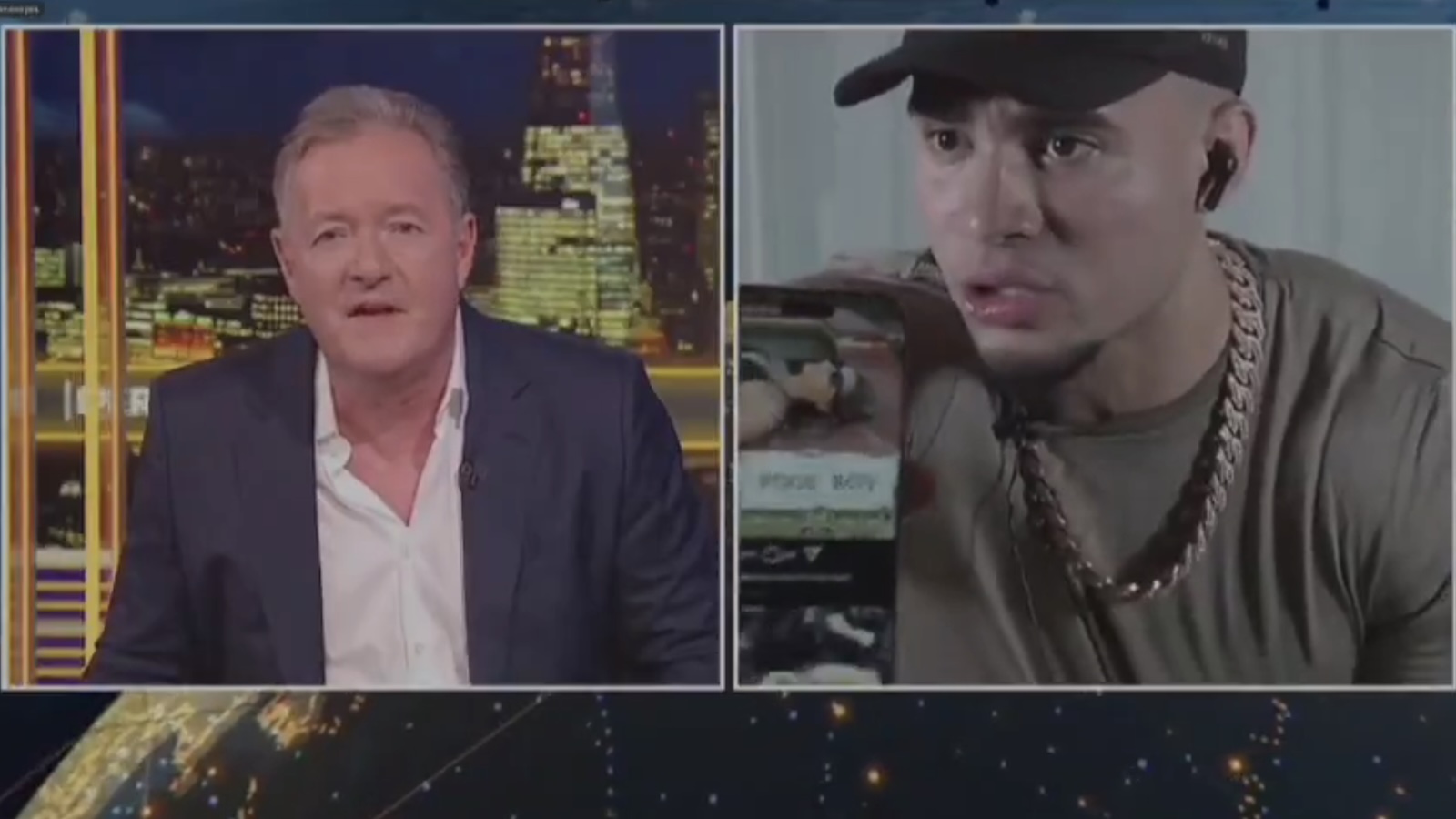
The Viral Moment: Why Piers Morgan Rage-Quit During HSTikkyTokky Chat
In the volatile landscape of live television and digital content, few moments capture public attention quite like a dramatic on-air clash. When two outspoken personalities collide, the result is often a viral sensation, dissecting themes of accountability, ethics, and the evolving nature of public discourse. Such was the case on March 18, 2026, when veteran broadcaster Piers Morgan found himself at the center of a heated exchange with content creator Harrison Sullivan, better known as HSTikkyTokky. What began as a contentious interview on Morgan’s show, *Piers Morgan Uncensored*, rapidly devolved into a personal attack that saw Morgan abruptly abandon his own broadcast. This incident didn't just go viral; it became a flashpoint, highlighting the increasingly blurred lines between journalism, entertainment, and online provocation.
The confrontation between
Hs Tikky Tokky and Piers Morgan wasn't merely a disagreement; it was a masterclass in escalation, revealing much about the strategies employed in today's media ecosystem. From accusations of homophobia to unsubstantiated claims about Epstein's Island, and ultimately, deeply personal remarks, the segment spiraled out of control in real-time, leaving viewers stunned and prompting widespread debate across social media platforms.
The Spark: Homophobia Accusations and the "Manosphere" Doctrine
The interview, livestreamed by HSTikkyTokky, began its descent into controversy around the 58-minute mark. Piers Morgan immediately honed in on comments made by Harrison Sullivan in the Netflix documentary, *Louis Theroux: Inside the Manosphere*. In that program, HSTikkyTokky had stated he would "disown" his child if they came out as gay. Morgan, known for his direct and often confrontational interview style, pressed Sullivan on these remarks, labeling them homophobic.
This line of questioning struck at the core of HSTikkyTokky's public persona as a prominent figure within the "manosphere" – a collection of online communities often associated with traditional gender roles, hyper-masculinity, and controversial views on sexuality and relationships. Morgan’s challenge forced Sullivan to defend a position that many consider bigoted, setting the stage for the explosive exchange that followed.
HSTikkyTokky, clearly agitated by the direction of the conversation, expressed his discontent:
"I don't really respect you trying to come on and say I'm homophobic, and try to really push that point, when I wouldn't say I'm homophobic at all. What I do with my children is up to me. Okay?"
This initial pushback, asserting personal autonomy over parenting choices, attempted to deflect the accusation. However, for Morgan, the issue was one of broader societal implications, challenging the notion that such views are purely private matters when expressed publicly by an influential figure. The tension was palpable, and it was clear that neither participant was willing to concede ground.
Escalation: Epstein, Ghislaine Maxwell, and Baseless Personal Attacks
As Morgan continued to press on the homophobia allegations, HSTikkyTokky swiftly pivoted, launching a series of unsubstantiated and highly incendiary counter-accusations. This tactical shift, often employed in confrontational media encounters, aimed to put the interviewer on the defensive by introducing unrelated, sensational claims.
Sullivan, seemingly frustrated by the persistent questioning, retorted:
"I don't agree with you going to Epstein's Island and having freak-offs with Ghislaine Maxwell and the rest of them. I don't need to bring it up because this is about misogyny and everything like this. Okay? Okay? I don't agree with that, sir. Freak-offs on the Island. Are you sure? Are you sure, Piers?"
Morgan vehemently denied these explosive claims, which referred to the disgraced financier Jeffrey Epstein and his associate Ghislaine Maxwell, both convicted of sex crimes. He refuted the allegations emphatically, stating, "I'm a hundred percent positive - I never met the man, never went to his island, I met Ghislaine Maxwell for five minutes at a book launch." Morgan then advised Sullivan that he was "making himself look very stupid" by pursuing such baseless accusations.
Despite Morgan's firm denial, HSTikkyTokky persisted, asking "why was he in the files," attempting to lend credibility to his outrageous claims. This segment of the interview showcased a dangerous trend in modern discourse: the deployment of unsubstantiated rumors and conspiracy theories to deflect legitimate scrutiny. For journalists and broadcasters, navigating such aggressive and often false accusations in a live setting presents a significant challenge. It forces a choice between engaging with the absurd, which can inadvertently legitimize it, or disengaging, which can be perceived as an admission of guilt by some segments of the audience. The intensity of this exchange foreshadowed the ultimate collapse of the interview. For a deeper dive into the immediate aftermath, you can read more about
Piers Morgan Storms Off Show After Heated HSTikkyTokky Interview.
The Breaking Point: Morgan's Wife and the On-Air Walkout
The already volatile situation took an irreparable turn when HSTikkyTokky moved beyond public accusations and launched a deeply personal and vulgar attack on Piers Morgan's wife. This transgression crossed a fundamental boundary of professional conduct and decency, pushing the interview into uncharted and unacceptable territory.
Sullivan's remarks were explicit and highly offensive:
"Oh, really? Really? To people like you, sir, I don't mind that. You make yourself look like an idiot every single day, when your wife is at home, posting pictures that you're out and she wants to get used like a toy by a big Black man, who is cleaning her car. Is that why you have a problem with me? Is that why you are pushing this homophobic narrative? Because I'm the big Black man that sha**ed your wife, when you were on a holiday. Okay? We can all have push and the shove, sir. Let's go back to talking about the documentary, and less of the homophobia."
To compound the offense, at the one-hour-three-minute mark of the Kick livestream, HSTikkyTokky displayed a photograph of Piers Morgan's wife on screen. This act of brazen disrespect proved to be the final straw for Morgan. Visibly disgusted and having reached his limit, he declared:
"Let's end this, please. You know what? I'm not doing this. Sorry, guys. This is pointless."
With that, Piers Morgan stood up and walked off his own set, leaving the broadcast. HSTikkyTokky's immediate reaction was to burst out laughing, seemingly reveling in the chaos he had created. He then challenged Morgan to "come back on, and we'll chill it out," while continuing to dismiss the "homophobic bulls**t." This defiant response highlighted a calculated strategy of provocation, designed not to engage in meaningful dialogue, but to create viral content through shock and outrage. The **Hs Tikky Tokky Piers Morgan** incident perfectly encapsulates the risks and rewards of this kind of content creation. For a comprehensive look at the key elements of this dramatic exchange, explore
HSTikkyTokky vs. Piers Morgan: Homophobia, Epstein, and The Walkout.
Beyond the Blow-Up: Aftermath and Broader Implications
The immediate aftermath of the Piers Morgan rage-quit was a flurry of activity across social media. Videos of the incident, particularly the final dramatic moments, were shared relentlessly, racking up millions of views. HSTikkyTokky, true to his pre-interview boast of planning to "own" Morgan, continued to post messages after the show, maintaining his defiant stance and effectively controlling the narrative of the 'win' from his perspective.
This viral moment serves as a stark illustration of several critical trends in modern media and public discourse:
*
The Weaponization of Outrage: For certain content creators, generating outrage is a primary objective. By pushing boundaries and engaging in highly provocative behavior, they guarantee visibility, shares, and ultimately, engagement and monetization. The walkout itself became the desired outcome for HSTikkyTokky, confirming his ability to disrupt and dominate a traditional media platform.
*
Ethical Boundaries in Interviews: The incident reignited debates about the ethical limits of interviewing. While robust questioning is a cornerstone of journalism, where does personal attack supersede it? Morgan's decision to walk off, rather than dignify the personal smears, can be seen as a necessary stand against a complete breakdown of decorum. However, it also handed the narrative advantage to his opponent.
*
The Challenge for Traditional Media: Broadcasters like Piers Morgan constantly grapple with how to engage with new media personalities and the "manosphere" without amplifying harmful ideologies. The attempt to hold HSTikkyTokky accountable for his comments ultimately backfired, transforming into a spectacle that overshadowed the initial critical inquiry.
*
Audience Responsibility: For viewers, the incident underscores the importance of critical media literacy. Viral moments, while entertaining, often strip away context and nuance. Understanding the motivations behind such confrontations and discerning factual information from sensationalism is crucial in an age of constant digital content.
Practical Insights for Navigating High-Stakes Public Discourse:
- For Interviewers: Maintain control by setting clear boundaries before and during an interview. Be prepared for deflection and personal attacks, and have a strategy for disengaging respectfully if lines are crossed, without losing the moral high ground.
- For Interviewees: While aiming for virality can be tempting, resorting to unsubstantiated claims and vulgar personal attacks often undermines credibility and can have long-term reputational damage, even if it generates short-term buzz.
- For Audiences: Approach viral content with skepticism. Investigate the full context of a confrontation. Understand that sensationalism is often a deliberate strategy designed to manipulate attention rather than inform.
Conclusion
The **Hs Tikky Tokky Piers Morgan** debacle wasn't just another televised argument; it was a potent symbol of the evolving media landscape. It underscored the power of provocation in the digital age, the fragility of journalistic ethics in the face of calculated outrage, and the ongoing struggle for traditional media to adapt to a world increasingly shaped by online personalities. While Piers Morgan may have "rage-quit," the incident was arguably a strategic victory for HSTikkyTokky in terms of generating maximum attention. The episode serves as a powerful reminder for content creators, broadcasters, and audiences alike that in the pursuit of the viral moment, the lines between debate, entertainment, and outright disrespect are becoming dangerously thin, with profound implications for how we consume and engage with public discourse.